
Have you ever heard of a wood wasp? Wood wasps, also known as horntails, are fascinating creatures, but many people know very little about them. These small insects have adapted to living in various types of environments around the world and can be found on every continent except Antarctica. They live primarily in forests, so if you’re interested in learning more about these unique critters, read on! We’ll discuss what wood wasps look like, where they live, what they eat and how they reproduce – plus we’ll cover whether or not these intriguing animals pose any danger to humans.
How To Identify a Wood Wasp
Wood wasps, or horntails, are any of the 150 non-social species of wood-boring insects which are members of the family Siricidae and belong to the order Hymenoptera. They have long, slender bodies that range in colour from black to brown. Their wings are usually transparent, and they have two antennae on their dom-shaped heads. Wood wasp size can vary; however, they are especially large insects. For example, a giant wood wasp (Urocerus gigas) can be anything between 10-40mm in length, and a pigeon horntail can grow up to 50mm.

Where Do Wood Wasps Live?
Wood wasps are a species of insect that can be found in many parts of the world. They have an affinity for wooded areas and forests, where they find plenty of dead wood to feed on. In North America, these insects can be found from Alaska all the way down to Mexico. In Europe, they inhabit countries such as France, Germany, and Spain. Wood wasps also live in Asia and Africa as well.
In their natural habitats, horntail wood wasps prefer to nest in decaying logs or stumps that are soft enough for them to bore into with their mandibles. These nests usually contain multiple chambers which house larvae and eggs until they reach maturity before emerging as adults later on in life. The adult females will then go out searching for more deadwood so that she can lay her eggs there too.
What Do Wood Wasps Eat?
Wood wasps have an interesting diet which includes both plant material and other insects. The primary food source for wood wasps is dead or decaying wood which they eat by boring into it with their mandibles. This provides them with essential nutrients such as proteins, carbohydrates and lipids, which help them grow and develop properly.
In addition to eating dead wood, some species feed on other insects, such as caterpillars and beetles. These insects provide additional sources of protein for the wasp larvae to consume during the development stages before they reach adulthood. In some cases, adult female wood wasps may also feed on nectar from flowers or sap from trees in order to supplement their diets further still.
It’s important to note that while most species of horntail wasp are harmless predators who eat decaying matter or small insects like caterpillars, some species can cause damage to wooden structures if left unchecked – so it’s best not to ignore any signs of infestation! If you suspect these pests have invaded your home, contact a professional pest control service immediately for assistance in removing them safely without causing any harm to either yourself or your property.
How Do Wood Wasps Reproduce?
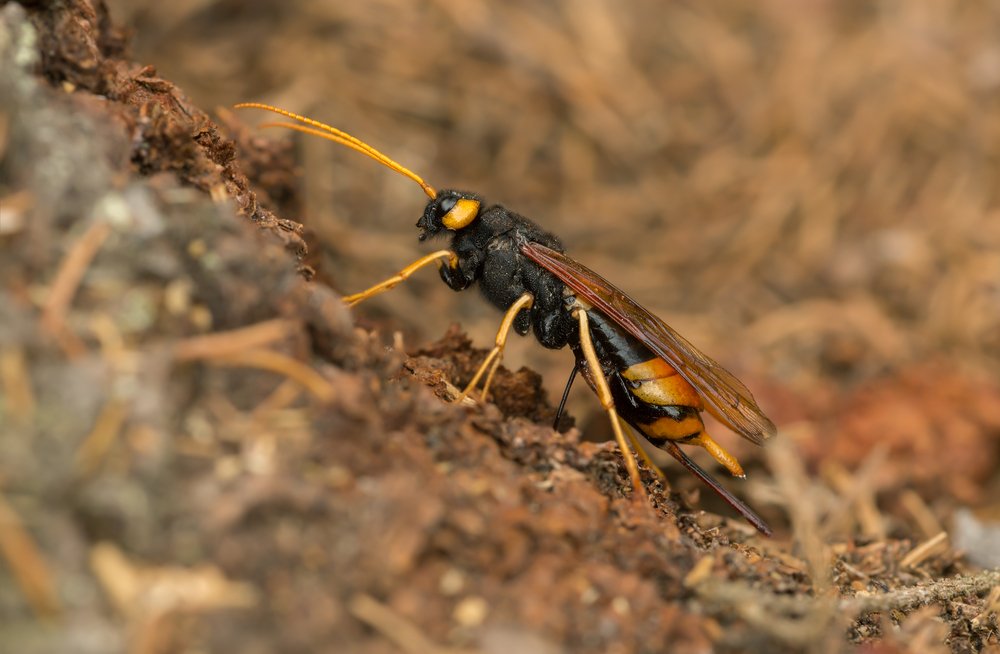
Wood wasps reproduce by laying eggs inside dead wood. The female will use her ovipositor to drill into the bark and deposit an egg or two in each hole she makes. These eggs hatch into larvae, which then feed on the wood until they reach adulthood. As adults, these wood wasps emerge from the wood, ready to start their own life cycle again.
The reproductive process of a horntail wasp begins when it finds a suitable piece of deadwood for its home. This can be anything from a fallen tree branch to decaying logs found in forests or even wooden structures such as fences and decks around homes. Once it has located this source of food, the female will use her ovipositor – a long tube-like organ – to drill into the bark and deposit an egg or two in each hole she makes.
These eggs are then left alone until they hatch into larvae after several weeks’ time, depending on environmental conditions like temperature and humidity levels that affect their development rate. When hatched, these larvae begin feeding on the surrounding wood material until they eventually grow large enough to pupate within their chambers before emerging as adult wasps some weeks later with wings fully developed for flight.
It is important to note, however, not to confuse these wood wasps with other species, such as carpenter bees. While they share similar characteristics, carpenter bees do not lay eggs inside deadwood like true woodwasps do; instead, opting for softer materials like rotting tree stumps where they can create burrows.
Are Wood Wasps Dangerous?
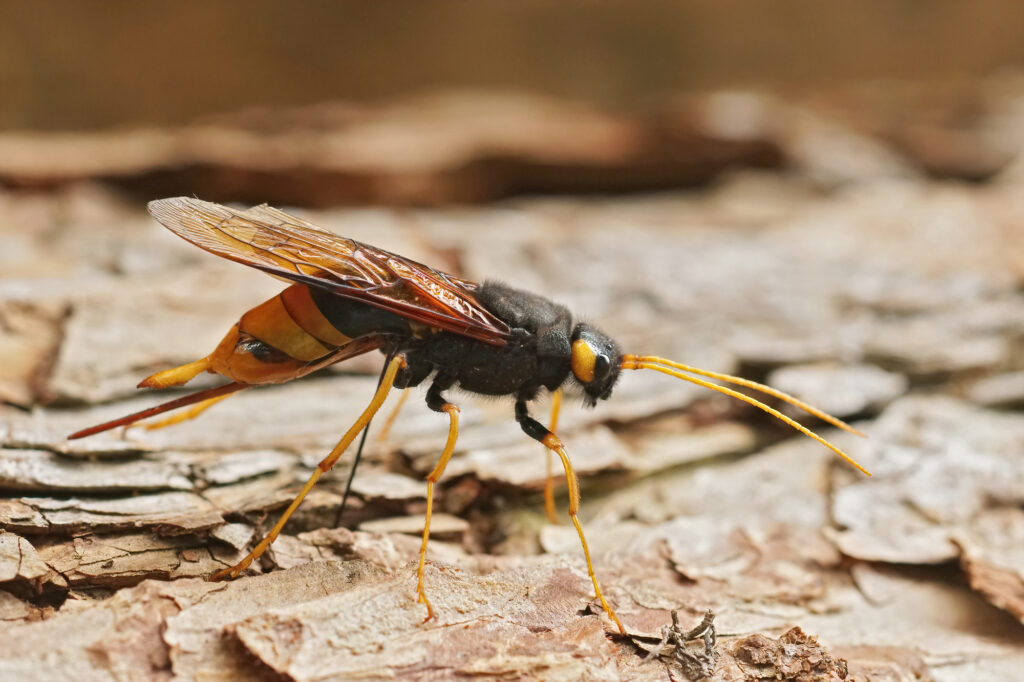
Horntail wood wasps are not a threat to humans, as they do not sting or bite. They are actually quite beneficial insects, as their larvae feed on other wood-boring pests like bark beetles and termites. However, if left unchecked, wood wasps can cause damage to wooden structures due to their habit of boring into them for food sources. This feeding activity weakens the structural integrity of wooden structures such as houses, decks, fences and furniture over time.
In addition to weakening wooden structures with their tunnelling activities, wood wasps may also be responsible for introducing diseases that affect plants and trees by carrying spores from one location to another while burrowing through different types of timber. In some cases, this can lead to tree death or serious plant health issues, which can have an impact on local ecosystems if left untreated.
Fortunately, there are several methods available for controlling infestations caused by wood wasps without resorting to chemical treatments or insecticides, which could potentially harm beneficial species living in your garden or yard area too. One method is physical removal; simply removing any affected timber from your property should help reduce further infestation levels significantly over time, provided you dispose of it properly away from other susceptible areas nearby where new colonies could form again later down the line.
FAQs In Relation To Wood Wasps
Are wood wasps harmful?
Wood wasps are not generally considered to be harmful. They do not sting or bite, and their larvae feed on dead wood rather than living plants. However, they can cause damage to wooden structures if the infestation is large enough. In these cases, it may be necessary to remove the affected wood and replace it with new material in order to prevent further damage.
Do wood wasps sting people?
No, wood wasps do not sting people. They are solitary insects that feed on wood and other plant material. Their main purpose is to create tunnels in the wood they consume for their larvae to live in and develop. The female will use her ovipositor (egg-laying organ) to make these tunnels, but it does not have a stinger like some other species of wasp. Wood wasps are harmless to humans and can be observed from a safe distance without fear of being stung or harmed in any way.
Are wood wasps invasive?
Wood wasps are not considered to be an invasive species in the UK. They are native and have been present for many years, but their numbers may fluctuate depending on environmental conditions. Wood wasps play an important role in the natural environment by helping to break down dead wood, which helps create habitats for other wildlife. While they can cause damage to timber structures if left unchecked, this is usually only a minor issue that can be managed with proper pest control measures.
Are they beneficial?
Wood wasps are beneficial insects because they help break down dead trees by feeding on them and creating tunnels inside the rotting material, which allows airflow throughout it – thus aiding decomposition even further. This process is essential for healthy forest ecosystems since it helps recycle nutrients back into the soil, which other organisms need to survive.
These creatures also play an important role in pollination since some species feed on nectar from flowers while others use their long tongues (known as “proboscis”) for drinking nectar directly from blooms. This means that not only do wood wasps provide food sources for other animals, but they also help spread pollen between plants – making them integral members of any ecosystem where they live.
Where are wood wasps found?
Woodwasps are found in most temperate and tropical regions around the world. They typically inhabit forests, woodlands, orchards, and other areas with plenty of dead wood. Wood wasps are also found in urban settings, where they feed on decaying trees and logs. In the UK, they are commonly seen in gardens and parks during springtime when they emerge from their overwintering sites to lay eggs. Wood wasps have a wide range of hosts, including deciduous trees such as oak, willow, elm, ash and poplar, as well as conifers like pine and spruce. They prefer to nest in dead or dying branches but may also use living ones if available.
How long do they live?
The lifespan of a single specimen can vary greatly depending on environmental conditions; and some individuals may live up to several years, while others only last several weeks before succumbing to death due to natural causes or predation by larger animals such as birds or lizards.
Conclusion
In conclusion, wood wasps (horntails) are an interesting species of insect that can be found in many parts of the world. They play an important role in their ecosystems by helping to break down dead wood and providing food for other animals. Although they may look intimidating, wood wasps are generally harmless and pose no threat to humans. With a little knowledge about them, you can safely observe these fascinating creatures in their natural habitats.
Sources and References
- Horntail Wasp Facts – catseyepest.com

Sam loves to learn about animals and their habitats. He has been a nature lover from a very young age, and has been writing papers and articles about wildlife for as long as he can remember.
Great post! One of these amazing creatures appeared in my garden today – it was beautiful, but I had no knowledge of them at all. Thank you for all this very useful information. Much appreciated.
You’re welcome!