
The privet hawk moth is an impressive creature of the insect world, with its striking wingspan and vibrant colours. It’s a species that is commonly seen in parts of Europe, particularly in the UK, where it has become one of our most beloved moths. But what do we really know about this fascinating moth? In this article, you’ll learn all about the identification, habitat and behaviour as well as life cycle and conservation status of the privet hawk moth – from caterpillar to adult! So read on if you’re keen to discover more about this beautiful creature.
How To Identify a Privet Hawk Moth
The privet hawk moth (Sphinx ligustri) is a species of moth found in Europe, North Africa and parts of Asia. It has an average wingspan of around 3-4 inches and can be identified by its distinct yellowish-brown colouration with dark brown stripes running along the length of its body. The head is usually black or grey, while the thorax and abdomen are typically yellowish-brown. Its hindwings have a white border that distinguishes it from other moths in the same family. Identifying a privet hawk moth can be done by looking for its distinctive grey-brown wings with pink and yellow markings.
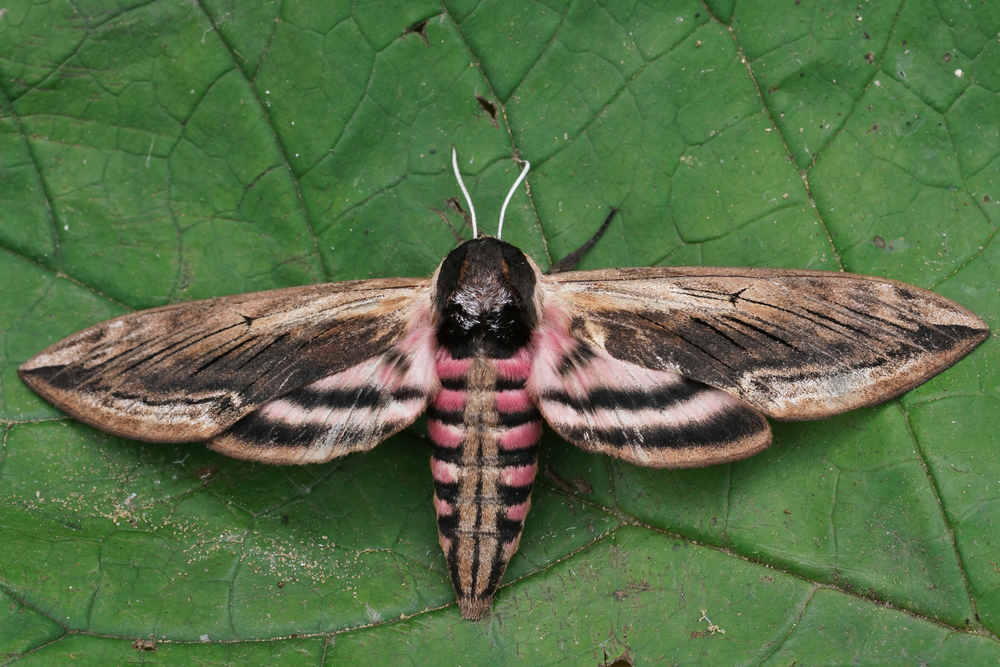
Privet Hawk Moth Habitat
Privet hawk moths live in wooded areas where there are plenty of trees and shrubs for them to feed on during their larval stage. They can be found throughout Europe but prefer warmer climates such as southern France or Spain during summer months before migrating northwards towards Scandinavia during wintertime when temperatures drop too low for them to survive outside hibernation periods underground in soil cavities beneath tree roots or leaf litter piles at ground level.
They tend to remain close to their food sources so they can feed regularly without having to travel far distances looking for sustenance; however, if necessary, they may fly up into nearby trees in search of more suitable feeding grounds if needed due to competition from other insects within their habitat range.
The privet hawk moth is most commonly found in woodlands, gardens, parks, meadows and hedgerows, where there are plenty of trees for them to feed on nectar from flowers during their adult stage. During this time, they fly mainly at night but can also be seen during the day searching for food sources such as honeysuckle or ivy blossom. They tend to rest on tree trunks during daylight hours, so they can easily take off if disturbed by predators like birds or bats.
Privet Hawk Moth Behaviour
In terms of behaviour, these moths prefer to remain solitary rather than congregate together as some other species do; however, they will come together when mating season arrives, which occurs between May and August each year, depending on geographical location.
During the day, they rest among foliage or under tree bark so as not to be seen by predators such as birds or small mammals like mice and voles, which may eat them if given a chance.
At night they fly around looking for food sources such as nectar from flowers or sap from trees. They will use this to build energy reserves before mating season begins in late spring/early summer, when males search for females at dusk while emitting loud buzzing sounds that attract potential mates below them. When courting potential mates, males will perform elaborate courtship displays involving flight patterns that involve hovering above female moths before eventually landing next to them, ready for copulation.
The privet hawk moth is generally quite docile unless disturbed; then it may become agitated and try to escape by fluttering away quickly or releasing an unpleasant smell from its scent glands located near its head area – this odour acts as a deterrent against predators who would otherwise try to eat it.

Privet Hawk Moth Life Cycle
The privet hawk moth has a complex life cycle, with four stages that span from the egg to adult moth.
The life cycle of the privet hawk moth begins with eggs being laid by female adults onto leaves near potential food sources such as hawthorn bushes or oak trees. The eggs are small and yellow-green in colour. These eggs then hatch into larvae after approximately 10 days, depending on environmental conditions such as temperature and humidity levels present at any given time. Warm weather speeds up development, whereas cold slows it down significantly, meaning hatching times may vary greatly across different regions within Europe alone.
Once hatched, the larvae (caterpillars) feed voraciously on various types of plants such as Privet, Lilac and Ash trees. They grow quickly and moult several times before reaching their full size after about four weeks. At this stage, they are approximately 3 cm long with brownish-black stripes running along their bodies from head to tail.
After feeding for two or three weeks more, the caterpillar will spin a cocoon around itself, where it will remain for up to 10 days while it undergoes metamorphosis into its adult form – a large greyish-brown moth with white spots near its wingspan tips which can reach up to 8 cm wide when fully grown.
Once mating has taken place, females lay new batches of eggs, thus completing one generation’s life cycle before beginning anew the next season
Privet Hawk Moth Caterpillar
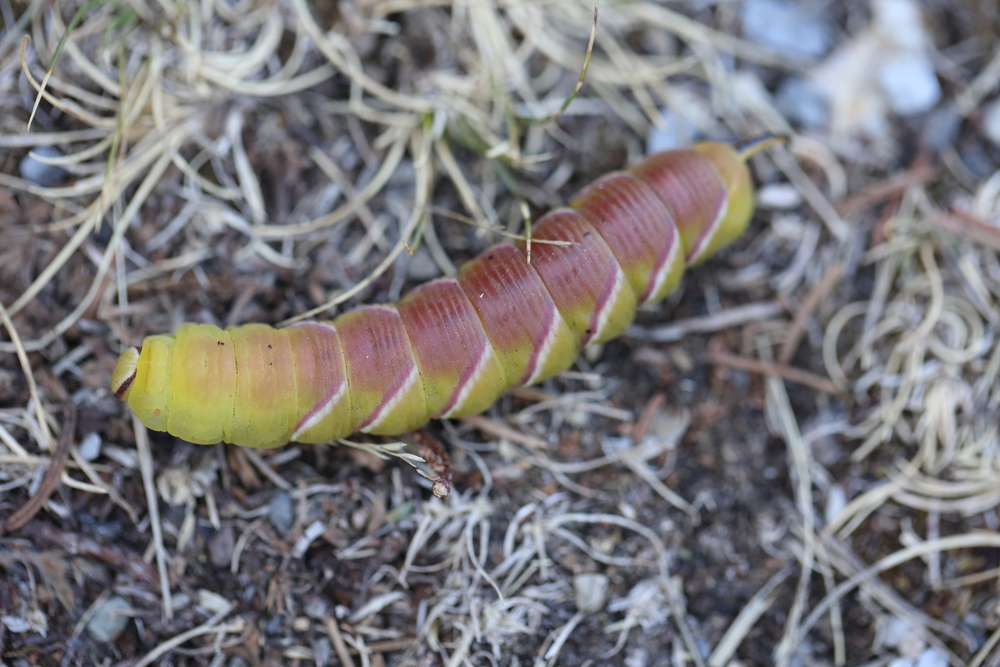
The privet hawk moth caterpillar is a medium-sized species of moth, measuring between 2 and 3 inches in length. It has a distinctive yellow-green colouration with darker green stripes running along its body. Its head is dark brown or black, and it has two antennae on either side of its head that are used to sense the environment around it. The caterpillar also has four sets of legs which help it move around quickly when searching for food or shelter.
When fully grown, the privet hawk moth caterpillar will have an orange stripe running down its back from head to tail as well as white spots along each side of its body. This helps camouflage the insect amongst foliage so predators cannot easily spot them.
Conservation Status
It has been classified as ‘Least Concern’ on the IUCN Red List due to its wide distribution and large population numbers.
However, there are still some threats that could impact this species’ conservation status in the future. One major threat is habitat loss due to urbanisation. Additionally, pesticides used for crop protection can also have an adverse effect on these moths by reducing their food sources or directly killing them off through contact with the chemicals.
To help protect this species from further decline, several organizations are taking action to conserve it. For example, The Wildlife Trusts works closely with landowners to create suitable habitats for wildlife, such as meadows full of wildflowers which provide nectar sources for adult moths while providing shelter and food resources for caterpillars too. Furthermore, they also advise farmers on how best to use pesticides without causing harm to local wildlife populations like the privet hawk moth.
Privet Hawk Moth FAQs
Are privet hawk moths rare in the UK?
No, privet hawk moths are not considered rare in the UK. They have a good distribution across southern and central England. However, their population is thought to be declining due to habitat loss and fragmentation. The species is found mainly in southern England, but there have been sightings further north as well. It can be seen from late May through August, with peak activity occurring during June and July.
Where can I find privet hawk moths?
The privet hawk-moth is a species of moth found in the UK and across Europe. It is typically seen from May to August but can be spotted as early as April or late September, depending on the climate. The adult moths are usually found near privet hedges and gardens where they feed on nectar from flowers such as honeysuckle, buddleia and jasmine. They can also be seen flying around street lights at night. To find one, look for its distinctive brown wings with yellow stripes along the edges during daylight hours when it will likely be feeding on flowers or resting in nearby shrubs or trees.
Are hawk moths harmless?
Hawk moths are harmless to humans. They feed on nectar from flowers and do not bite or sting. While their large size may be intimidating, they pose no threat to people and can even be beneficial in pollinating plants. Hawk moths are also a food source for many other animals, such as bats and birds. However, it is important to remember that these creatures should never be handled as they can become stressed by human contact.
What is the rarest hawk moth?
The rarest hawk-moth in the UK is the white-lined hawk-moth (Hyles lineata). It is native to North and South America but can be found in parts of Europe as well. This species has a wingspan of up to 5 inches, and its body colouration ranges from pale yellowish brown to dark reddish brown with white stripes along the sides. The caterpillar stage of this moth is green or pinkish in colour with yellow spots and a black head. It feeds on plants such as tomatoes, potatoes, tobacco, grapevine and petunia. This species is considered rare due to its limited range and habitat destruction.
Additional Resources

Ash is a contributing author who has been writing about wildlife for as long as he can remember. He has a vast knowledge of many different types of animals, from the tiniest shrews to the great whales that live in the deepest oceans.
Found a large brown Vine hawk moth caterpillar. They have two sets of large “eyes” at their end . I have grape vines and they were on the pavement. I believe they burrow into the soil to pupate, lucky it wasn’t run over by my dog!
I found 2 chrysalis in my garden in southern Alberta.
Today I found two Privet Hawk Moths linked together on one of my car tyres. Not knowing what they were at the time. Looking it up I found it was this moth. I picked it up by means of large leaf placed them in a hedge beyond my walled garden.
That’s wonderful Barry